
Shopping Cart
When people talk about kitchen knives, much of the attention tends to focus on the steel, the edge or the blade shape. Yet an equally important feature often goes unnoticed: the handle.
The handle is the point of contact between your hand and the knife. It affects essential factors such as ergonomics, control, safety and comfort during use. A good handle lets you work for longer with less fatigue, improves cutting accuracy and feels more stable and natural. Its material also affects:
- Moisture resistance.
- Hygiene.
- Maintenance.
- The knife’s weight.
- How it feels in the hand.
Today there are many options, from high-performance synthetic materials to natural woods with a strong artisanal appeal. Each offers specific benefits depending on the user, working environment and personal preferences.
Knowing the most common materials used for knife handles and their characteristics helps you understand which ones best suit the way you use your knives.
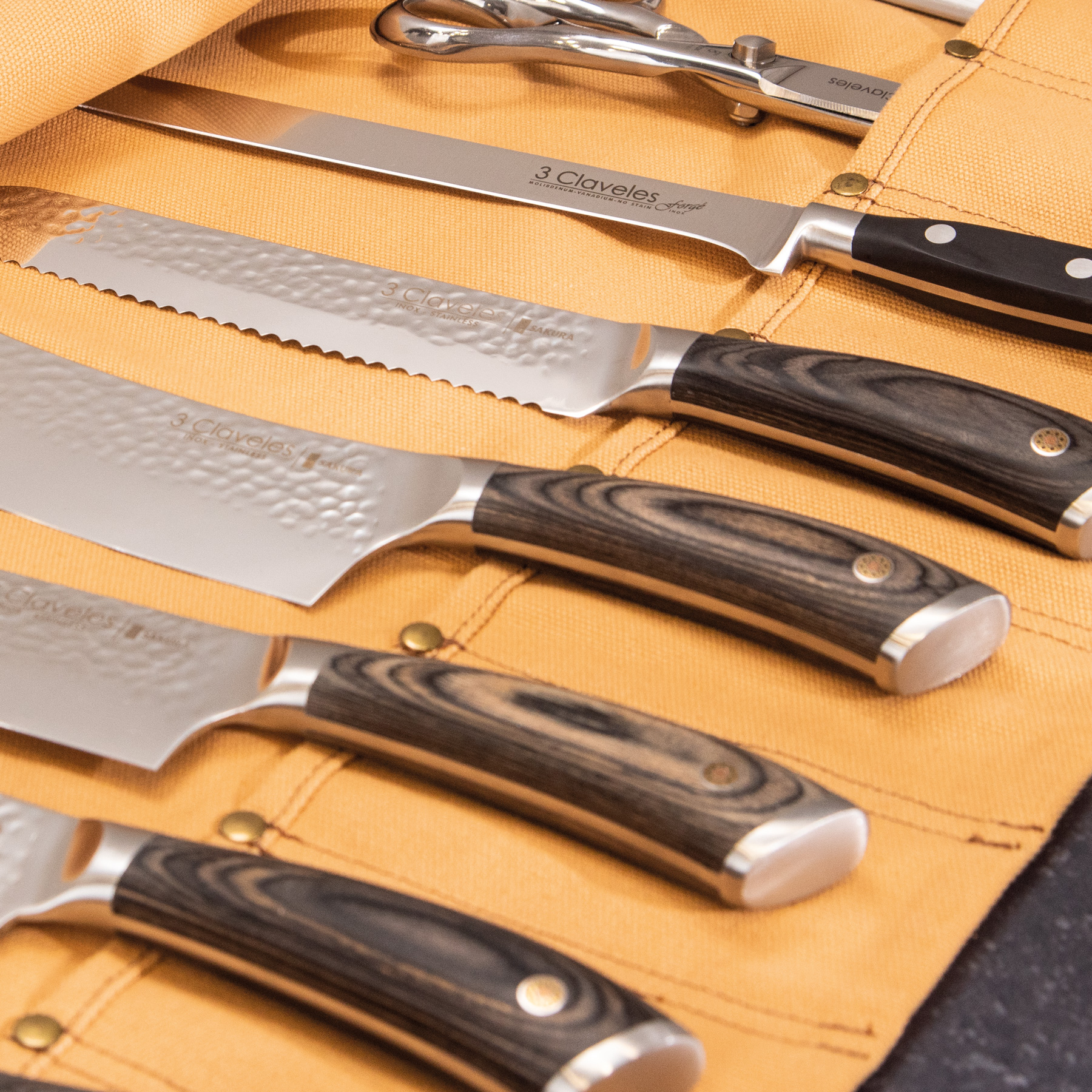
Sakura model with pakkawood handles
Why is the handle as important as the blade?
The blade does the cutting, but the handle is what gives you control. Excellent steel loses much of its potential if a knife feels uncomfortable, slippery or poorly balanced in the hand.
In the kitchen, especially during long work sessions, ergonomics make a huge difference. A well-designed handle reduces wrist strain, improves stability and allows more precise, safer movements.
The handle also directly affects the knife’s overall balance. Depending on its material and design, weight is distributed differently between the blade and handle, completely changing how the knife feels to use.
Safety matters too. When your hands are wet or greasy, or you are working continuously, a handle with a secure grip helps prevent slipping and improves control while cutting.
Durability is another key consideration. With intensive use, a handle is constantly exposed to moisture, temperature changes, cleaning products and grease. The material should be able to withstand these conditions without deteriorating or losing stability over time.
In professional environments, where knives are used for many hours each day, strength, hygiene and ease of cleaning are usually priorities. At home, many people place more value on feel, appearance and the character of the material.
Handle materials: advantages and disadvantages
The handle material affects grip, ergonomics, strength and maintenance. Each option feels different and responds differently to heavy use. Understanding the advantages and disadvantages of each material helps you choose a handle that suits your kitchen and preferences.
Wood: tradition, appearance and a natural feel
Wooden handles remain a favourite in quality cutlery. They offer a warm, natural feel in the hand that many people find hard to match with synthetic materials. Every piece is different: its grain, shades and textures make each handle unique, adding to the knife’s handcrafted character.
Wood offers a good grip, a pleasant feel and an elegant appearance. However, it requires a little more maintenance. As a natural material, it can be affected by moisture or sudden temperature changes if it is not cared for properly. Knife makers use several wood types, each with its own characteristics:
| Wood type | Main characteristics | Key benefits | Style / user |
|---|---|---|---|
| Maple | Light-coloured, lightweight wood with a fine grain. Smooth and comfortable to the touch. | Lightweight, comfortable and highly versatile in appearance. | Ideal for anyone looking for a balanced, comfortable handle with a clean look. |
| Oak | Strong, dense wood with pronounced grain. | Highly durable, secure in the hand and classically styled. | For users who prioritise strength and a solid feel. |
| Granadillo | Dark, very dense wood that resists wear. | Excellent stability, an elegant finish and a long service life. | Common on premium knives designed for demanding use. |
| Walnut | An excellent balance of appearance, feel and function. | Good grip, attractive ageing and a warm feel. | Popular in quality cutlery for its all-round balance. |
| Olive | Irregular grain and warm tones with plenty of character. | Artisanal appearance, natural feel and comfortable handling. | Perfect for people who appreciate design and Mediterranean character. |
| Pakka | Wood stabilised with resins to improve its strength. | Greater stability, moisture resistance and durability. | A versatile choice offering a natural look with less maintenance. |
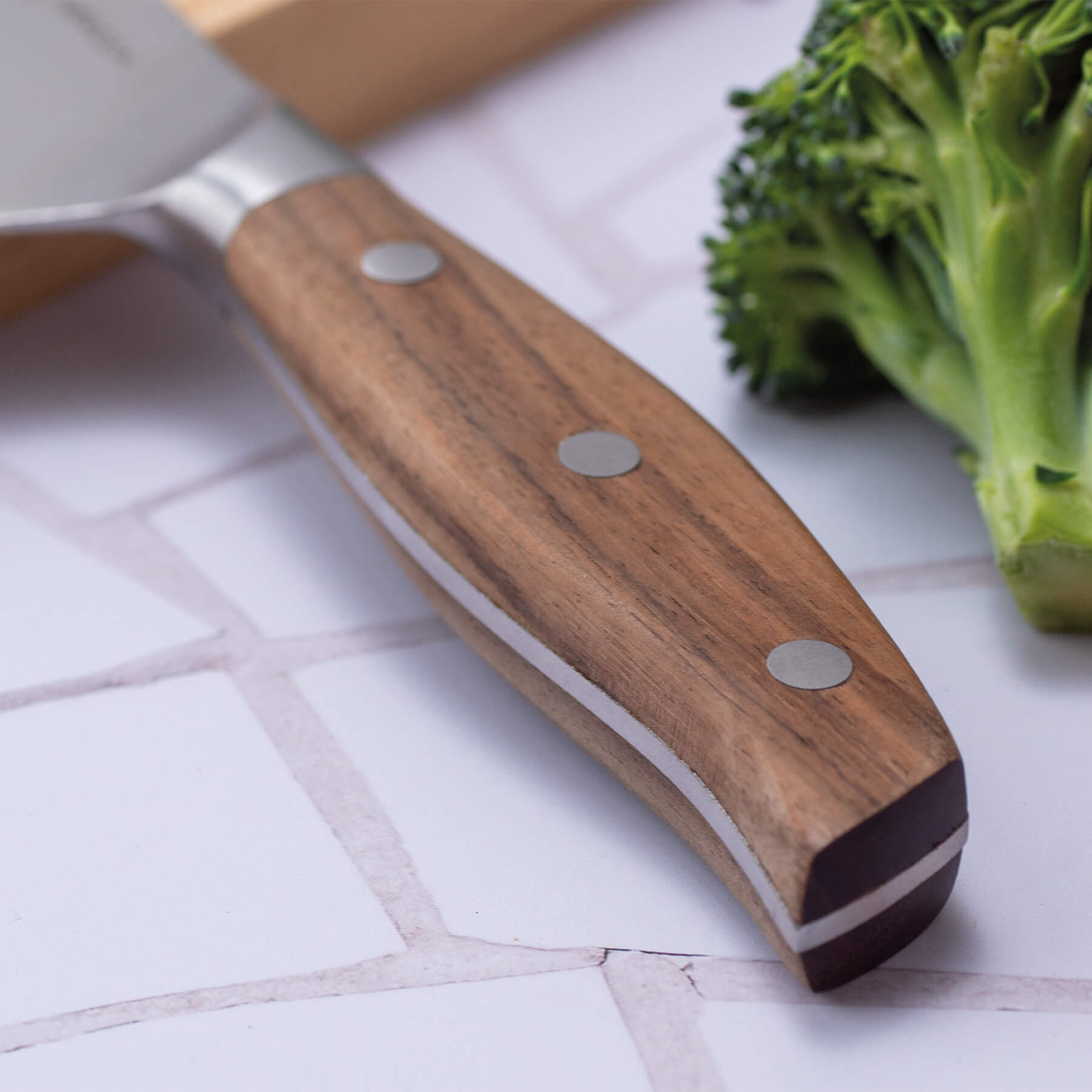
Norden model with an oak handle
Polypropylene, POM and ABS: leading materials in professional cutlery
Synthetic materials are widely used in professional cutlery for clear reasons: hygiene, strength and easy maintenance. Unlike wood, they do not absorb moisture and stand up better to chemicals, temperature changes, frequent cleaning and intensive use.
They also make it possible to create precisely shaped ergonomic handles and non-slip surfaces, which are especially useful in professional kitchens.
| Material | Main characteristics | Key benefits | Style / user |
|---|---|---|---|
| POM | A technical material widely used in mid- and high-range professional cutlery. Highly stable and wear-resistant. | Long-lasting, moisture-resistant and highly ergonomic. | Ideal for professional cooks and users who need reliability and intensive-use performance. |
| Polypropylene | Lightweight, hygienic and versatile. It stands up well to cleaning products and continuous use. | Low weight, easy cleaning and excellent handling. | Practical at home and at work, especially for those who value function and simple maintenance. |
| ABS | A rigid, impact-resistant synthetic material that performs well in everyday use. | Durability, stability and low maintenance. | Recommended for users looking for strength and everyday practicality. |
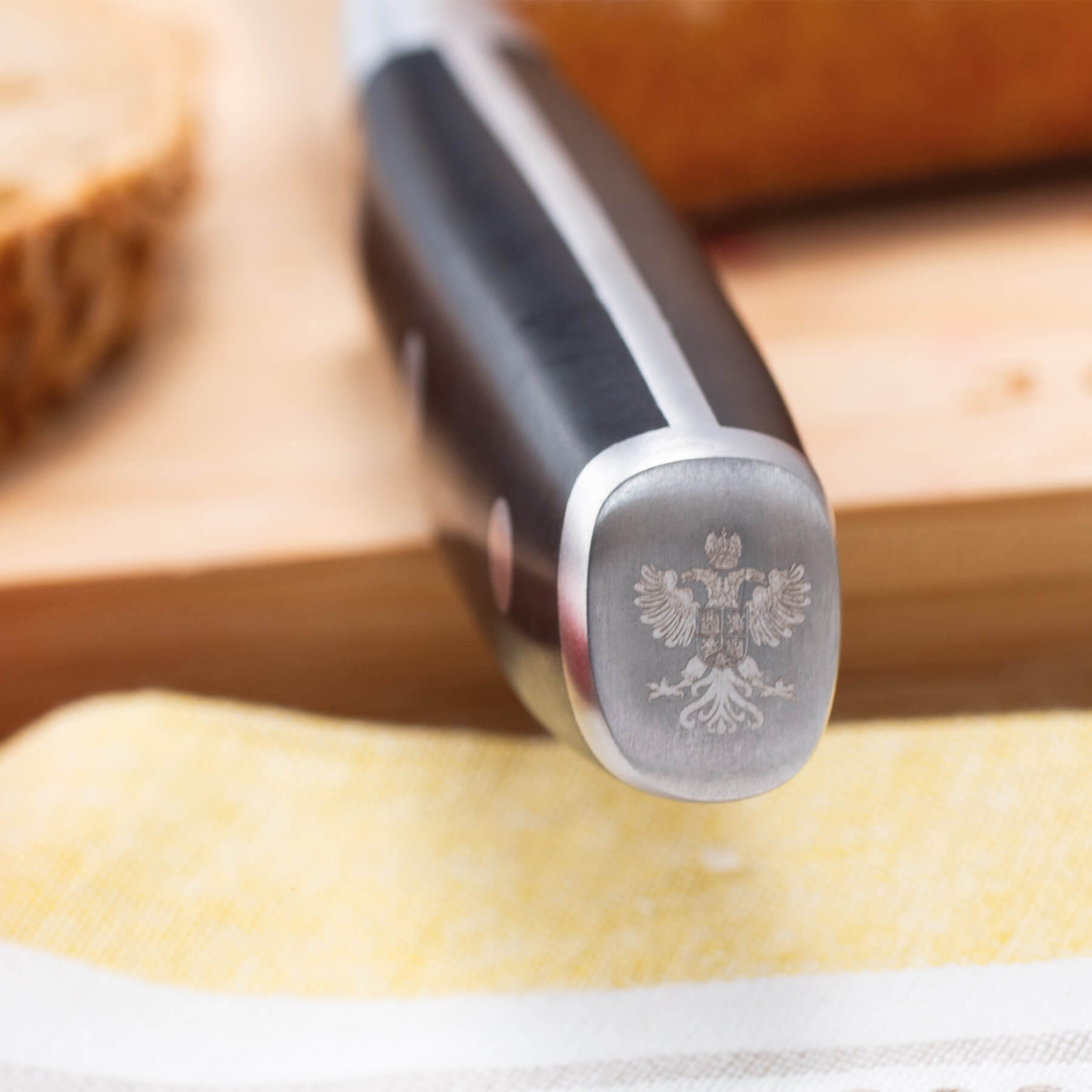
Toledo model with an ABS handle
Stainless steel: modern design and maximum strength
Stainless steel handles are increasingly common in contemporary cutlery, particularly in minimalist, modern designs. Their main advantage is strength: they stand up to moisture, cleaning products, corrosion and intensive use. They are also extremely easy to clean and highly durable.
They have a technical, professional look. The feel can be colder than other materials, however, and some users prefer a more natural grip. Even so, a well-designed, ergonomic knife with a stainless steel handle can be excellent to use.
How to choose a handle for your cooking style
The best handle depends not only on the material but also on how the knife will be used. How often you use it, your working environment, maintenance and personal preferences all help determine the right choice. Some users prioritise strength and hygiene, while others value appearance, feel or a handcrafted look.
Professional use
Synthetic materials such as POM, polypropylene and ABS are usually the best choices for professional environments. Their resistance to moisture and cleaning products helps maintain high hygiene standards.
Home and amateur use
At home, many people also value appearance, feel, design and the overall experience. That is why wooden handles remain so appealing in quality knives for home cooks.
Tips for maintaining your knife handles
Handle maintenance is essential to preserve a knife’s appearance and function over time. For wooden handles, avoid prolonged exposure to moisture and do not leave them soaking in water. Dry them after cleaning and occasionally apply a suitable oil to nourish the wood and prevent it from drying out.
Synthetic handles need less care, but it is still best to avoid extreme temperatures and overly abrasive products, and to dry the knife thoroughly after every wash.
Whatever the handle material, avoid putting the knife away while wet or leaving it in contact with food residue or harsh products for a long time. Use suitable storage such as knife blocks, magnetic holders or protective cases. This helps prevent knocks, warping and premature wear to both the handle and blade.
With a few simple habits and proper care, a good handle can retain its performance and appearance for many years.